


Genus/species: Gluconacetobacter liquefaciens (Gluconobacter liquefaciens)
Gram Stain: Negative
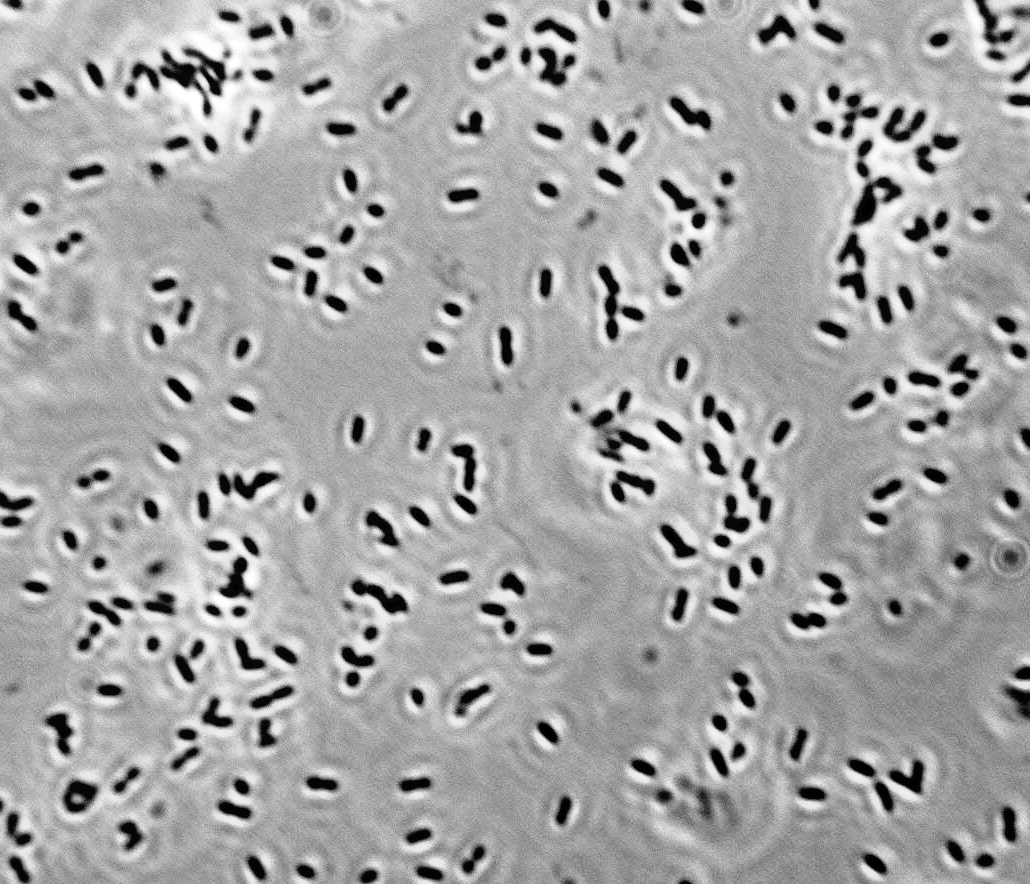
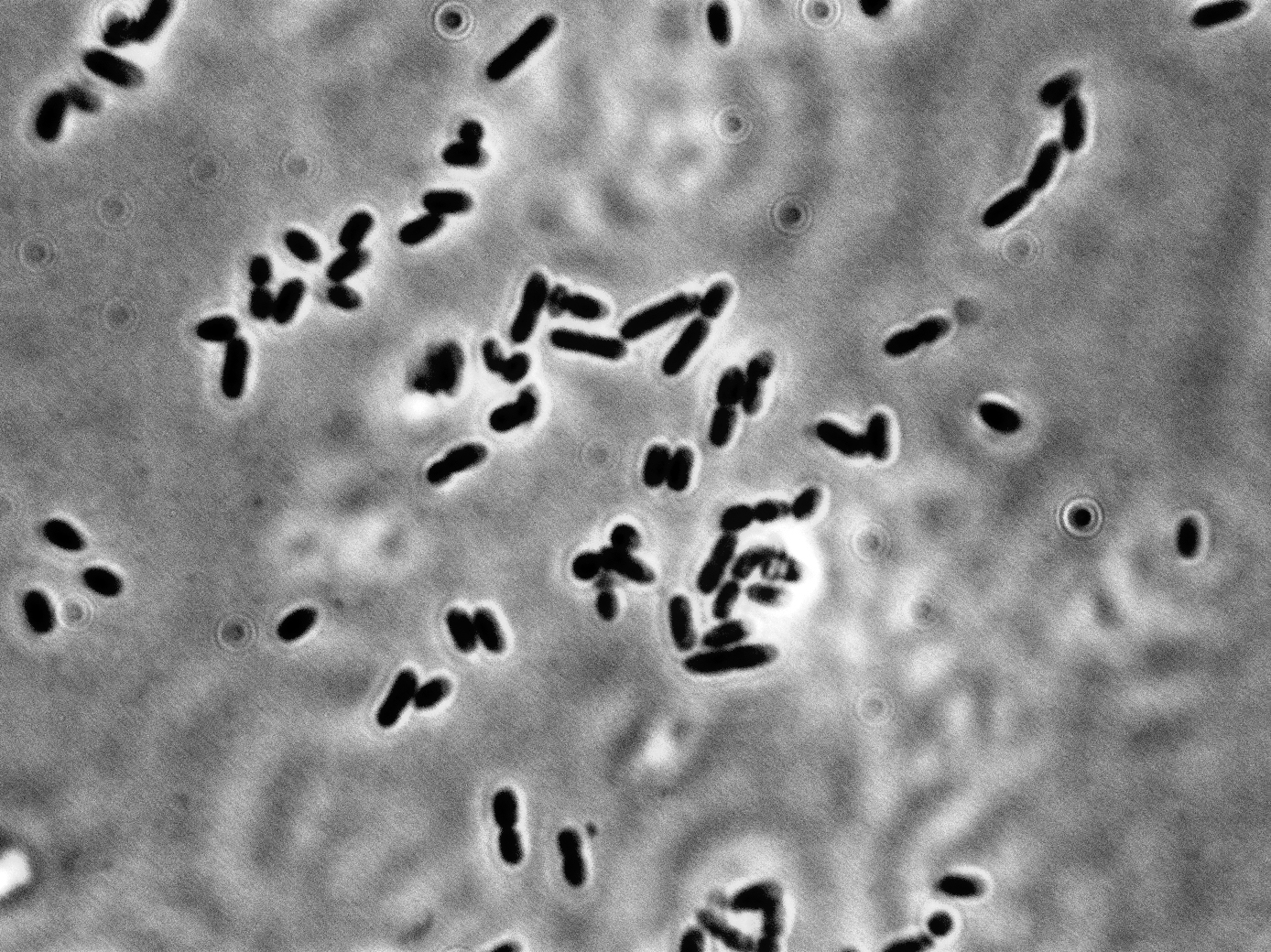
Morphology:
- Cell: Rod-shaped
- Colony: Off white, circular, raised
- Liquid Growth: Pellicle formed
 |
 |
Physiological Traits:
Growth substrates: ethanol. End product: acetic acid. Aerobic; needs oxygen for this conversion, can produce ascorbic acid (vitamin C).
Ecological Traits:
Found in nature associated with sugar; fruits, flowers, spoiled fruits (sugar converted to alcohol), especially in environments were the presence of alcohol prohibits the growth of other microorganisms.
Distinguishing Features:
Distinguishable from Acetobacter by determination of ubiquinone type using reverse phase paper chromatography or HPLC
Role in wine:
Usually present towards the end of the alcoholic fermentation, this species acts as a spoilage organism, turning the ethanol resulting from the fermentation into acetic acid.
Sensitivities:
- SO2: Sensitive
- Sorbate: Sensitive
- DMDC: Sensitive
- pH: <3.0 li="">
- Acids: N/A
- Ethanol: >15%
- Anaerobiosis: Req. oxygen
- Heat: >30C’
References:
Guillamon, J.M. and A. Mas. 2009. Acetic Acid Bacteria. In: Biology of Microorganisms on Grapes, in Must and in Wine. H. Konig, ed.
Jackson, R.S. 2008. Wine science. Principles and Applications. San Diego, Calif: Academic Press Inc. 187-189.
Sievers, M. and J. Swings. 2005 Genus VII: Gluconacetobacter. In: Bergey’s Manual of Systematic Biology. Garrity, G.M., ed. 2005. 2: 72.